Every Time You Eat, You Are Either Fighting Disease or Fueling It
An Inconvenient Truth
These words “Every time you eat, you are either fighting disease or feeding it.” were written on the wall of my favorite juicery in Chicago like graffiti. The first time I read them, I thought to myself… “Huh, that’s interesting.” But the more I frequented there, and the more I learned about nourishing my body, the more it became a mantra that has quietly shaped the way I move through the world and care for my body, and now, becomes a gentle lens through which you learn to care for yours.
The crazy part is, I mean it literally.
In my own journey of discovering what nourishing our bodies means, I learned that the average American consumed <5 lbs of sugar per year in the 1800s, but more than 150lbs of sugar per year in the 2000s, an exponential leap in sugar consumption that our biology simply hasn’t been able to reckon with yet. Take that and marry it with the fact that doctors give cancer patients a sugary glucose beverage before a cancer scan (PET Scan), because cancer cells literally are hungrier for sugar than most normal cells and as a result consume the crap out of it, allowing doctors to see these cells all lit up, using the sugar basically as tracking beacon for where cancer is in the body giving them what they need to reveal themselves in a way nothing else can, and you realize that these two insights alone are teaching us a ton about the brokenness of our food today and what it’s doing to our bodies.
Food is not neutral, it is information. It tells the body what to do next. It can support healing and vitality, or it can ask the body to work harder than it should. This idea is not meant to create fear or shame or rules you feel trapped by, but rather to offer a point of view: that nourishment is one of the most powerful, everyday ways we care for ourselves.
As imperfect as I am in sticking to these rules, there are three guiding principles I try to return to again and again…
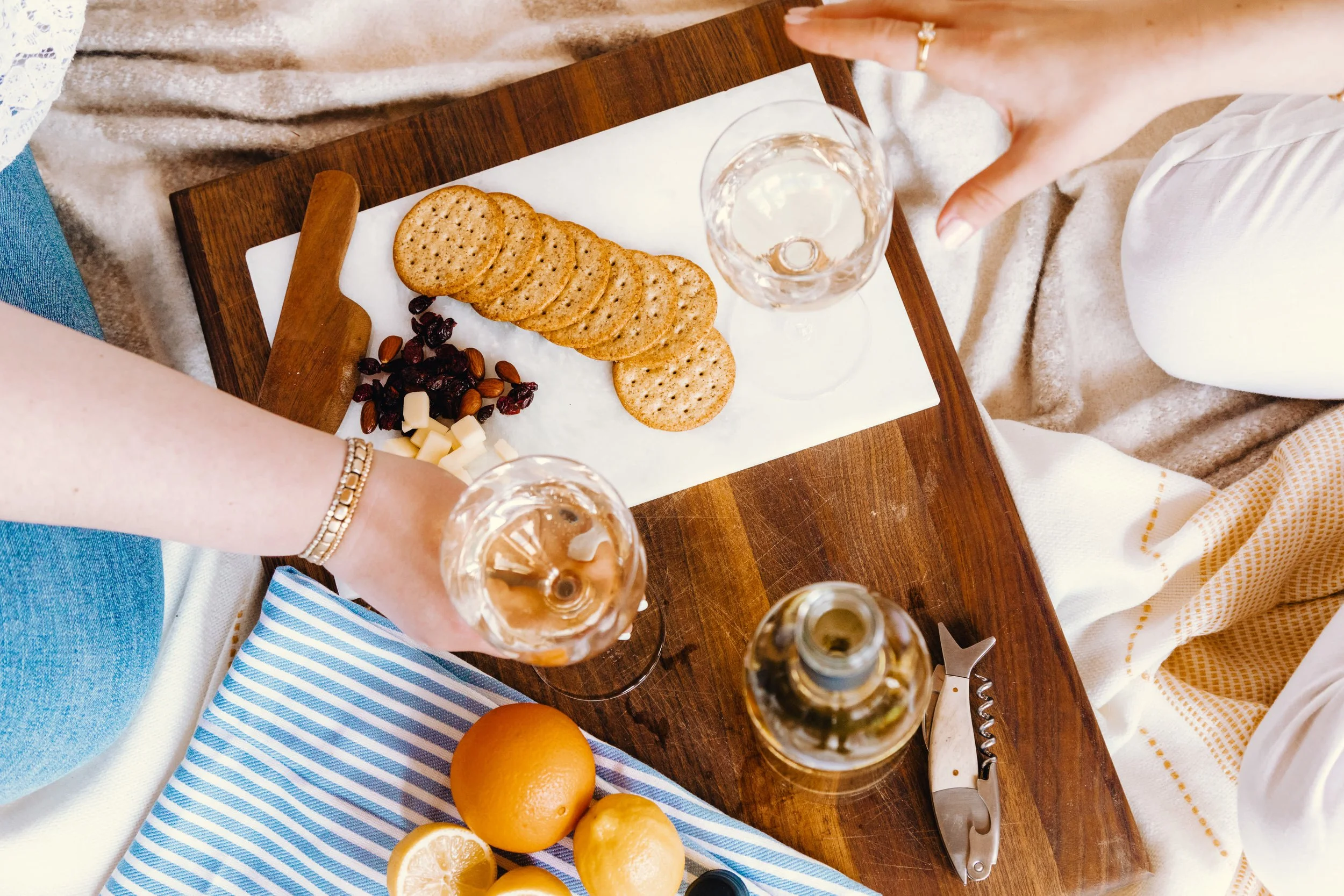
Three Rules
The first is: earth food first, homemade meals second, and everything else is a question.
As much as possible, when you are hungry begin with foods that come from the earth and still resemble what they once were: fruits, vegetables, nuts, eggs, grains, meats… simple ingredients with nothing to hide.
When you are shopping, curating your kitchen, and preparing for meal time, do this: Make them visible. And make saying “yes” to them easy.
When you come home hungry, what’s in front of you matters more than willpower ever will. A bowl of cut-up red peppers, cucumbers, or apple slices on the counter will get eaten simply because it’s there. Over time, those small defaults shape big outcomes. Hungry people grab what’s most convenient, so set your environment up to work for you, not against you. Earth food first isn’t about restriction, it’s about orientation.
The second is: whole food swaps in recipes.
We live in a time when almost anything can be delivered to your door faster than you could cook it yourself, and yet something important is lost when we outsource all our nourishment. When you let others cook for you, they are inherently cooking for profit and to make your brain and body like the meal so much you come back for it again, and again, and again — this means that in most cases the incentives to the business (profit margin and ingredient choices) are inherently out of your favor, if they can do an ingredient swap that makes something slightly more delicious and addicting, they are incentivized to do it… When you cook at home, even simply, you choose different ingredients and different quantities than any restaurant ever will.
We tend to overcomplicate what “cooking” is by thinking we have to make restaurant-quality meals at home… you don’t.
Start small. Learn one good, easy recipe, then another, then another, until feeding yourself well stops feeling like an event and starts feeling like instinct.
As you cook, stay curious. If a recipe calls for sugar, could honey work instead? If it calls for cornstarch, could you leave it out entirely? While restaurants, especially fast food and fast casual ones won’t make these swaps because it eats into margins or makes foods look less than delicious, when you cook for yourself you get to be choiceful about what you’re using, it’s purpose, and if you want to use it.
And look, you might not want to or be willing to to make every swap in your recipes, and that’s okay. But what matters here is the accumulation… Those small, thoughtful choices compound over time, quietly making you a little healthier each day without asking for perfection.
The third is checking in with my body before and after I eat.
Your body is always speaking, even when we’re too busy to listen. There is a mounting body of evidence that your gut is your second brain, and that what you eat can be hugely valuable or hugely harmful to how that brain is able to communicate with the rest of your body. So do this: before a meal, pause for a moment and notice how you feel—are you tired, depleted, energized, grounded? Then eat, at whatever pace is natural for you (I’m not a slow eater, even though I know it is better for your body to eat slower. A simple trick my sister-in-law uses is putting her fork down between bites, but alas how you eat matters less than that you stay present while you do). About twenty minutes after you’re finished, check back in. Good food, in the right quantity, should give you energy and clarity. Do you feel more alive than you did before? That’s a signal. Does your body feel heavy, foggy, or like it’s fighting to process what you just gave it? That’s information too. Over time, these small check-ins create a map—one that teaches you what foods work for your body, in what order, and in what amounts. Your gut is your second brain. Trust it.
My Wish For You
My wish for you is a long, healthy life filled with adventure, curiosity, and the ability to say yes to what you want for as long as you possibly can. Watching my grandmother age has been one of the great blessings of my life. At ninety years old, she is still fly fishing in rivers in Colorado, standing strong in cold, rushing water, fully inside a body that continues to carry her toward what she loves. That kind of vitality doesn’t happen by accident. We become what we eat, and every time we eat, we are either fighting disease or feeding it. The choices we make today, quiet, ordinary, repeated, are what build a future where we’re still standing in the river at ninety, or sitting on the shore. Choose with care. Choose with love. Your future self is already thanking you.
