You Don’t Rise to the Level of Your Goals, You Fall to the Level of Your Systems
The Benefits of Planning like an Engineer, so you can Live like an Artist
In Atomic Habits, James Clear offers a powerful idea: You don’t rise to the level of your goals — you fall to the level of your systems.
As someone who has always loved goal-setting, but was once told early in my career that I “didn’t have a system for anything,” I’ve come to appreciate just how right that sentiment is. The older (and busier) I get, the more magic I see in the power of well-designed systems.
If life is like a train, goals are the rails that point your train in a direction. Systems are the well-oiled engine that help you travel in that direction with ease, consistency, and far less friction.
The truth is, it’s hard to break the habit of being yourself. Systems, when thoughtfully designed (and iterated on over time!!!), become supportive structures that reduce resistance, conserve energy, and compound progress over time. That’s why I love them! And that is the kind of life that’s in front of you if you make getting this dialed in a priority,
What Systems Have Given Me
Here are some of the benefits I’ve experienced by building systems in my life:
Reduced mental load.
With a system for writing things down and assigning them a time and place, I no don’t have to carry the mental burden of trying to remember everything.
Increase leverage on past work.
Over the years I’ve created countless resources across projects and roles. With a system for storing and resurfacing that work, I don’t reinvent the wheel every time I face a similar challenge. I have patterns, references, and leverage.
Reduce waste of limited resources.
I didn’t used to be reckless with time, energy, or money, but I was unsystematic. I wasn’t intentional about how I structured my day, lined up my priorities, or optimized for greatest impact. The more I’ve come to understand myself, the more I’ve learned to design systems that put me in the right environment, with the right tools, at the right time, where I have the greatest probability of performing my best and getting the result I want (or anyone else wants from me, for that matter) with the least amount of friction.
If I could summarize my philosophy in one mantra, it would be this:
Plan like an engineer, so you can live like an artist.
I used to resist systems because they felt restrictive. Now I see them as the very thing that allows me to move toward my goals while living more freely, creatively, and calmly. What a 180!
In this post, I am going to break down my annual, quarterly, weekly and daily systems, give examples of the tangible tools and assets that are part of my process, as well as provide a recommendation for where you can start if you are new to this work.
Alright let’s get into it!
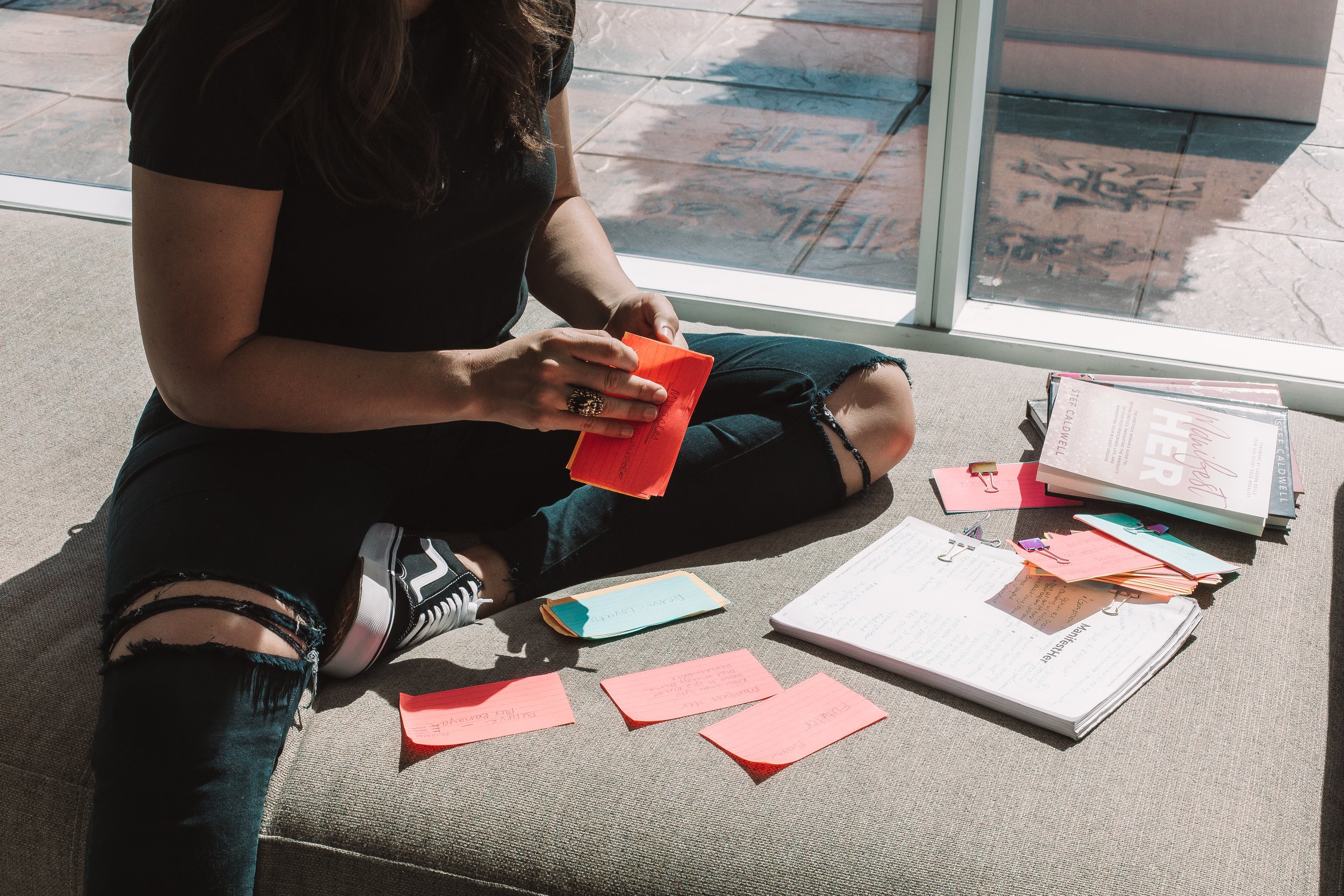
My Core Operating System
It’s taken time to evolve, but today I operate from a simple cadence: annually, quarterly, weekly, and daily systems, each layer supporting the next.
Annually
Each year, I do a personal retrospective, revisit my Authentic Code, and move through my goal-setting process.
What it is:
A reflective deck with prompts about the year behind and the year ahead, what felt aligned or misaligned, which habits helped or hindered, and what I want to call in next.
How it helps:
Pattern recognition deepens self-awareness. The more clearly I see myself (especially the undesirable patters that repeat themselves), the more intentional my future choices become.
What comes out of it:
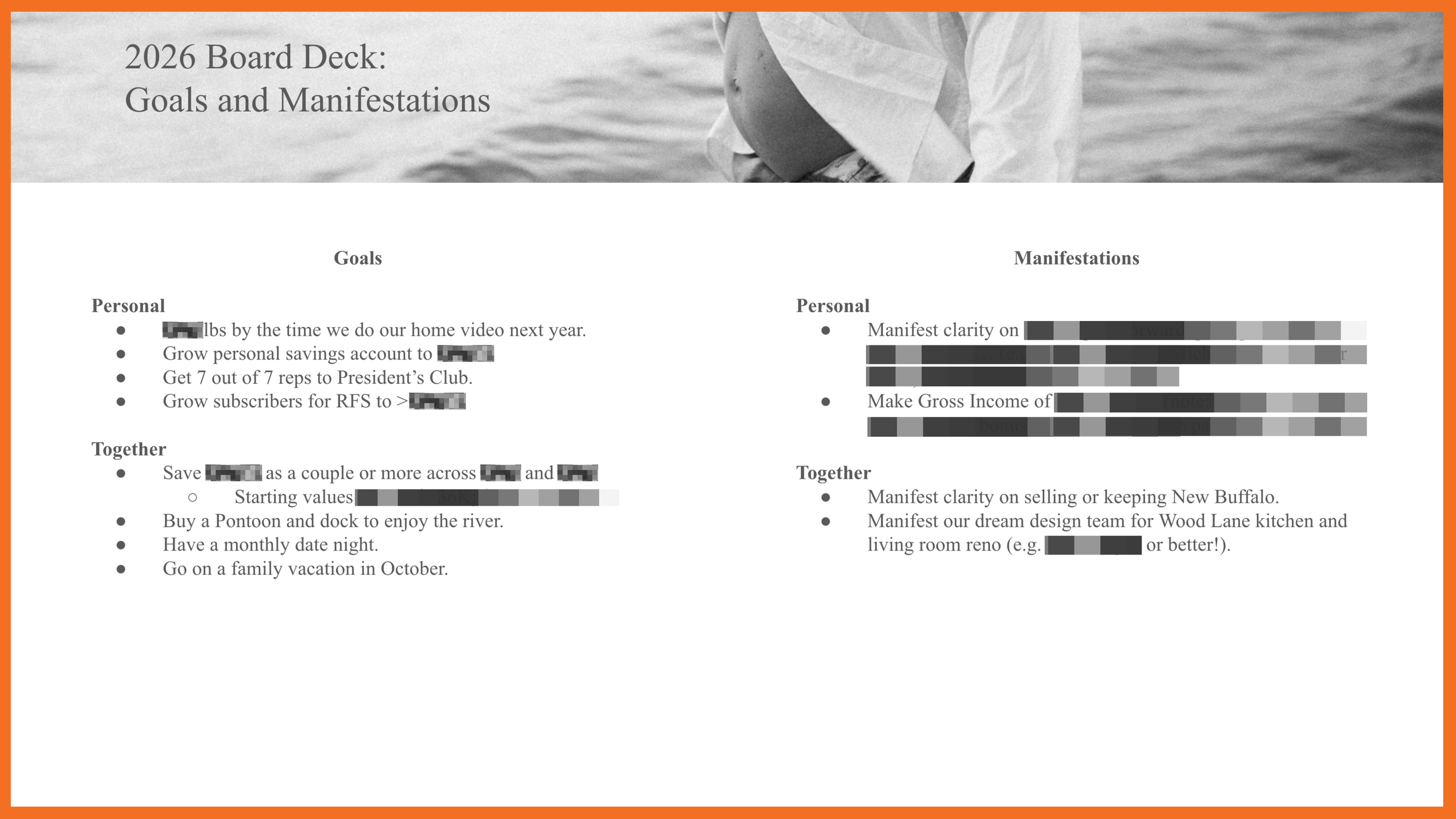
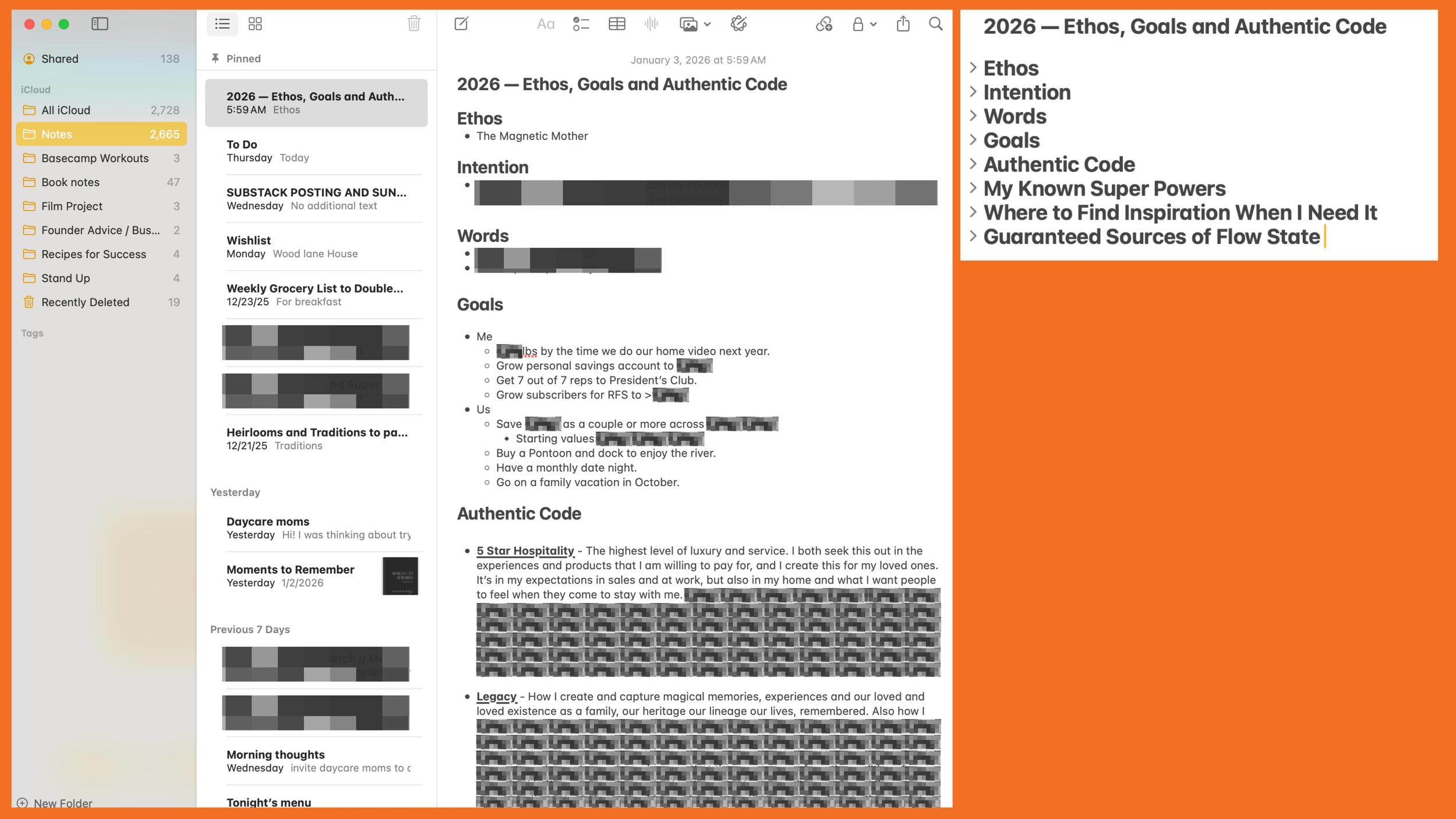
A “Board Deck” I update throughout the year and review quarterly with friends who serve as my personal board, offering accountability, encouragement, and perspective. I also keep my key goals in an Apple Note for easy reference.
Quarterly
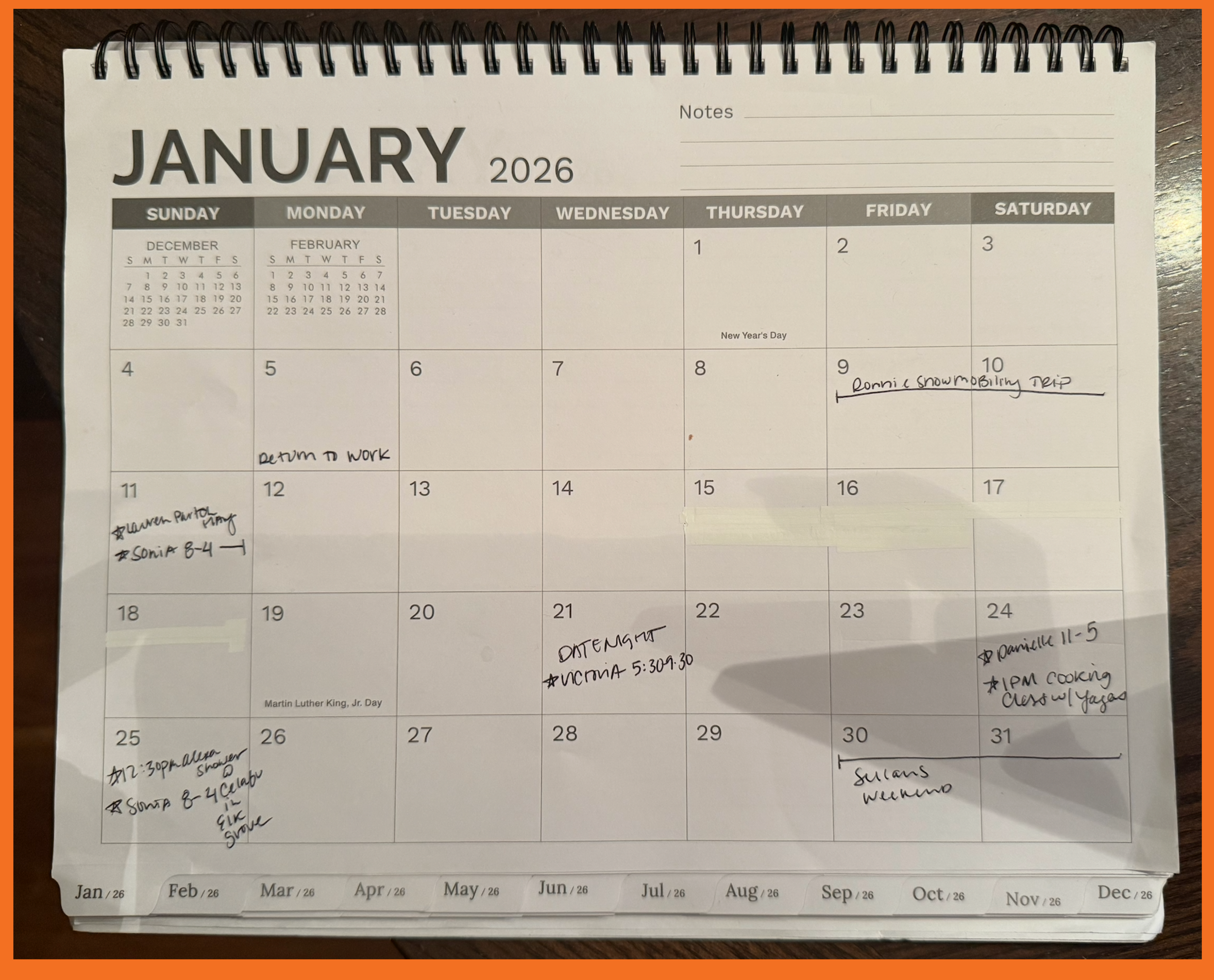
Each quarter, I update progress in my board deck, meet with my board friends, and most importantly, sit down with Ronnie to translate all of this to the calendar by looking ahead at the coming quarter.
What it is:
A life-planning conversation where we align on major initiatives and put intentional dates on the calendar, from vacations and renovations to financial planning meetings and personal projects.
How it helps:
It’s not about overscheduling. It’s about creating space on purpose, so the work that needs to be done has structure and play can be fully enjoyed.
What comes out of it:
Hard dates on our shared physical calendar for the things that matter (e.g. date night for this month)
Pro-tip: We keep a physical calendar, and anything added must be agreed on by both of us. This one system alone has changed our relationship for the better.
A short list of things we’re “Co-Noodling On” until the next quarter (e.g. where we want to go on vacation in Q4)
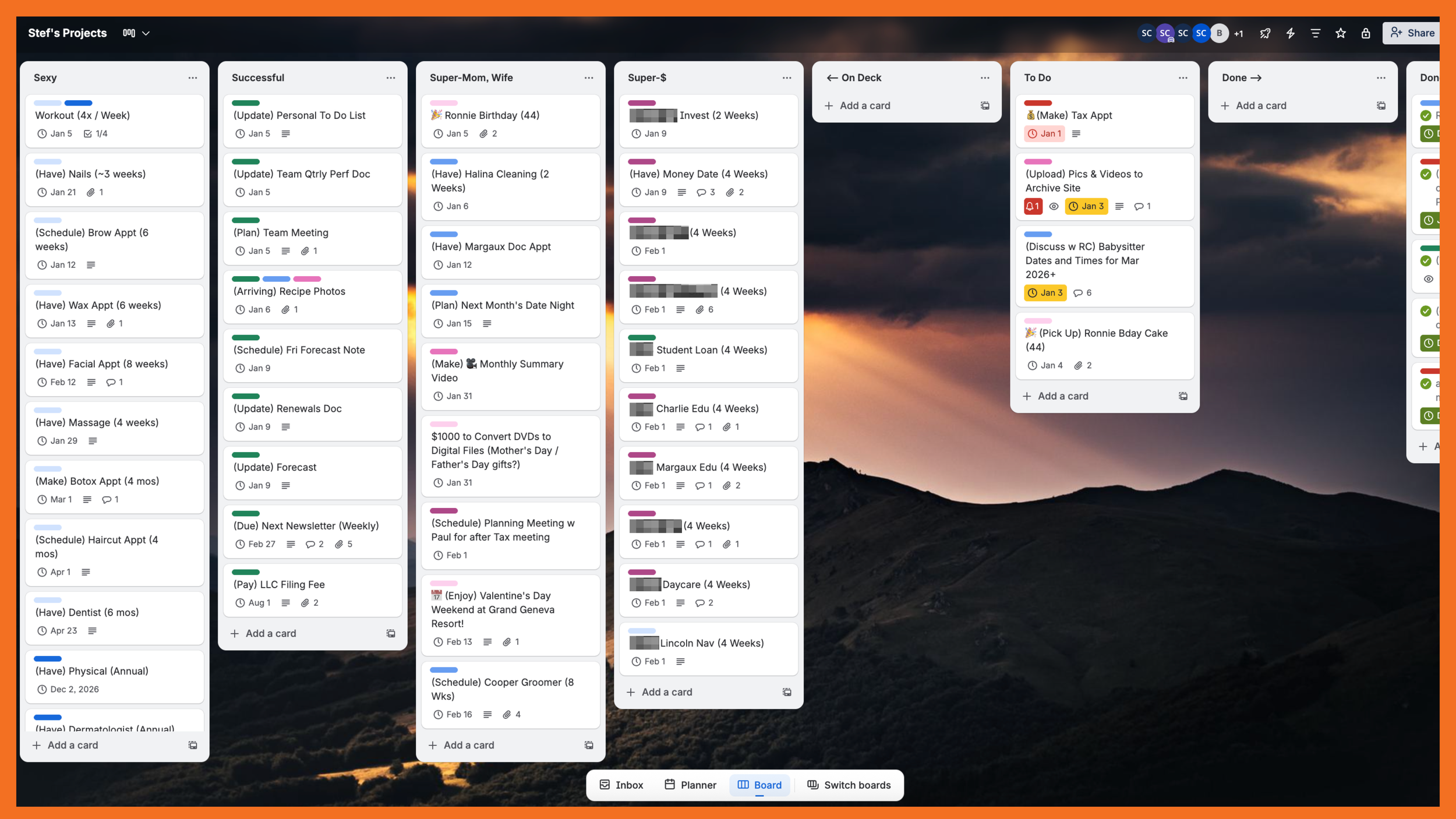
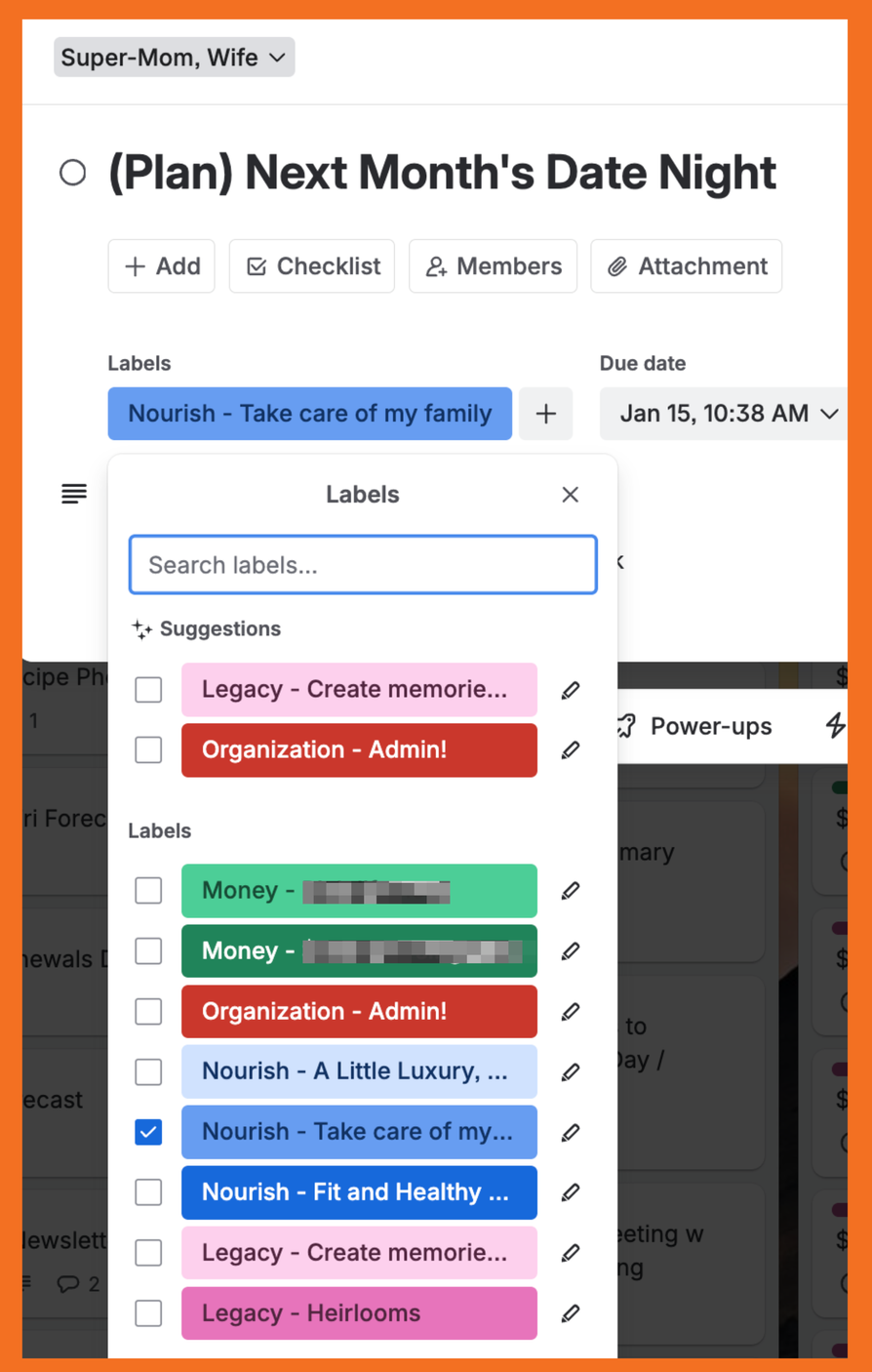
A refreshed Trello board of initiatives I’m leading (I then align them to my core priority pillars, and color-code them according to my Authentic Code)
Weekly
What it is:
A light Sunday night check-in with Ronnie to review the family calendar, our work schedules, and any out-of-routine logistics. If I haven’t already (I usually do this on Friday afternoons before daycare pickup) I also groom my Trello board, moving tasks from each of my priority pillars in “On Deck” to “Doing,” or back into “To Do” with a new date and updated step.
How it helps:
Done consistently, this keeps us operating as teammates rather than as individuals. By aligning on schedules, needs, and support ahead of time, we reduce surprise stress, and move through the week with a shared sense of ownership.
What comes out of it:
A few simple reminders on our calendars (e.g. A calendar invite that says “Reminder only: Ronnie picking up girls from daycare” or “Reminder: Ronnie work dinner downtown”) ensuring we enter our week with more clarity, better communication, and fewer surprises.
Daily
What it is:
A habit stack aligned to my values and goals. For me, that looks like:
coffee + writing
kids ready for school + drop-off
workout + start “morning thoughts” notes
shower + tidy house + beds made
a 30-minute “walk to work” while answering emails, slacks and messages + prioritizing my running to do list
Make a hot tea + begin the work day (sometimes deep work, sometimes 1-1s, sometimes client meetings depending on what the week is calling for, but general rule of thumb is to try to get the biggest thing out of the way first)
How it helps:
The effects of the habit stack aren’t obvious day-to-day, but they compound. This isn’t about performing habits; it’s about embodying the identity that’s in direct alignment with the bigger goals I am working towards. Some examples:
I am someone who feels grounded in a tidy, beautiful home → So I spend 10 mins tidying and making beds before I lock in on my work day.
I am someone who needs movement, purpose, and creative expression → So I spend time with my feet in motion in order to generate my best thinking and deliver my best results.
My systems reinforce who I am, not just what I do.
What comes out of it:
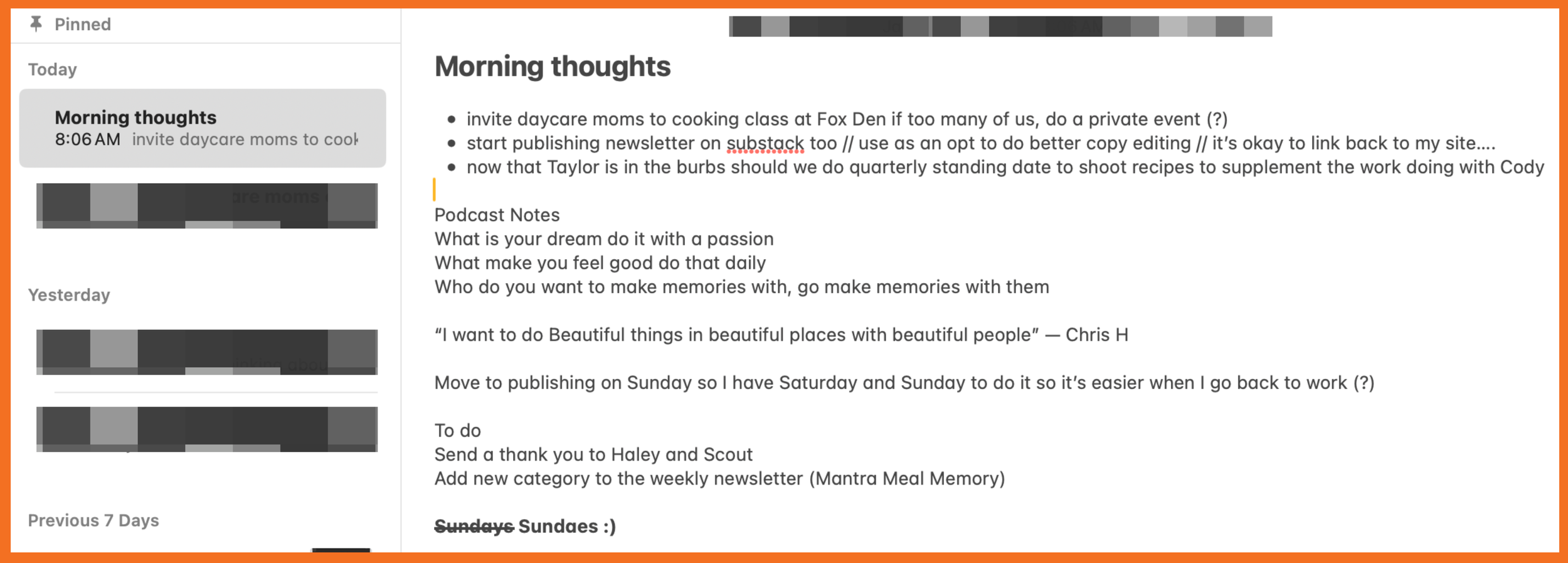
I used to do traditional journaling, but that stop serving me and the infinite open tabs I have in my head once I became a mom. So right now, instead of traditional journaling, I keep a running “Morning Thoughts” list on my phone, a loving act of kindness to my daily self so I don’t have to remember everything. By the time I sit down to work, I know exactly where to focus.
Parting Thoughts
Could this seem excessive? Maybe. But it didn’t appear overnight, this system evolved over years of intentional effort, layer by layer, season by season.
What I love most is how aligned it feels right now, and how in each new season I make swaps to make sure it keeps feeling that way (see example above from physical journaling to iPhone lists). My habits support my nervous system, my family, my creativity, my career, and the life I’m intentionally building.
If you’re just starting, don’t build everything at once.
Begin with 1–3 core life domains. Create a simple daily habit stack that supports them. Review and edit that habit stack every week for a month. Then let that semi-optimized habit stack compound for as close to 90 days as you can, notice that if and when you feel called to, you can refine it again. It’s your life, it’s your system, it needs to work for you.
Over time, I hope you find that your systems help you live with more ease, alignment, and momentum.
If life is a train, goals are the rails — and systems are the well-oiled engine that help the train glide to its multiple destinations. The clearer I get, the more efficient everything becomes, and I hope that is the case for you too.
You Might Also Like


